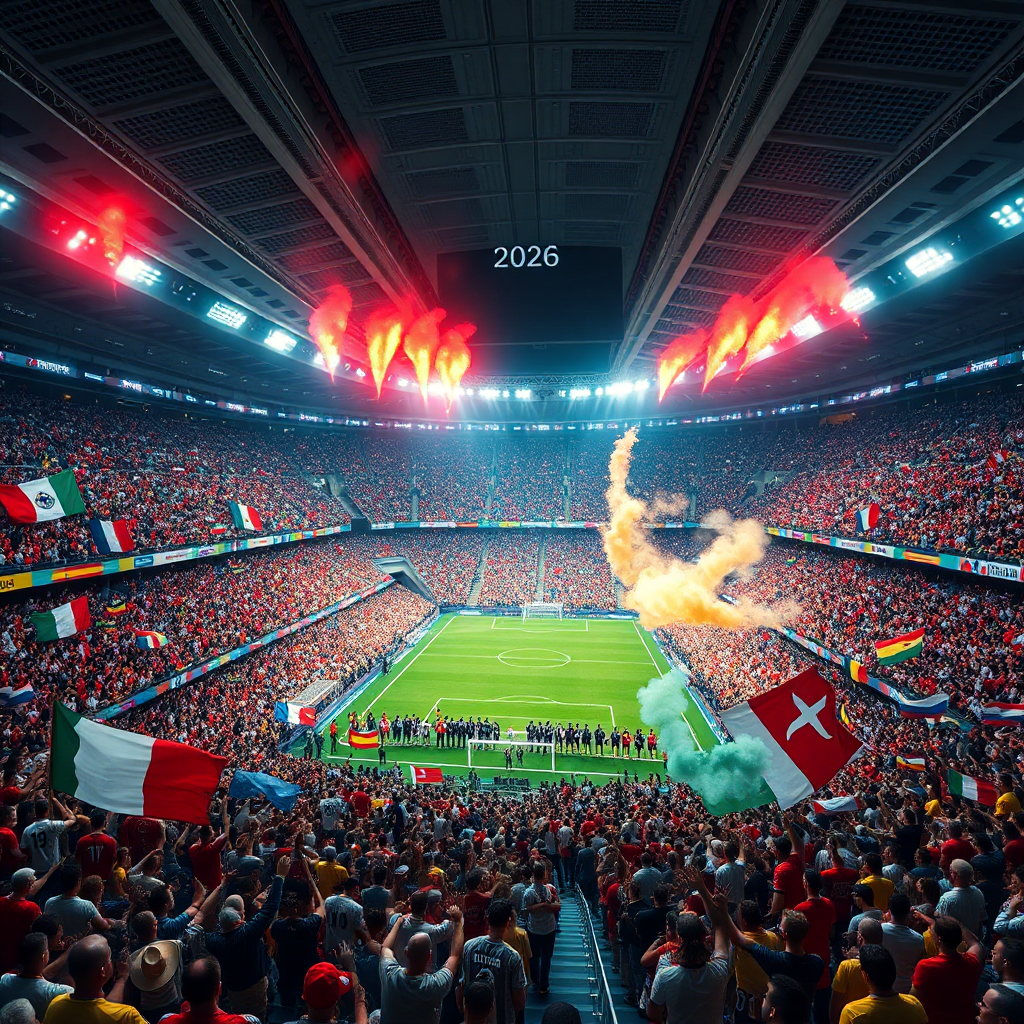
FIFA’s Automated Offside Technology Upgrade: A UX Expert Review of the Claims
The short answer is: the upgrade reduces decision time, but it does not eliminate the controversies that make offside rulings so emotionally charged. From a user-experience perspective, the shift matters less for the on-field accuracy gain and more for how fans, broadcasters, and stadium audiences receive the information. The gap between the official promise and what people actually feel in the moment is where the design work begins.
Over the past cycles, FIFA has moved from manual video review to semi-automated tracking, and now it is pushing toward a fully automated pipeline. The phrase “revolutionary” appears in nearly every press release, yet the experience of waiting for a draw on the screen remains remarkably similar. The meaningful change is in the backend: optical tracking chips, limb-tracking cameras, and algorithm-driven signal processing. For a UX analyst, this upgrade is not just a technology story; it is a test of how trust is built through clarity, speed, and feedback. This is also where a service like 7mcn becomes relevant for fans who are tracking live match data and want to compare official rulings against real-time statistics.
What the Announcement Actually Claims
FIFA’s stated position is that the new automated offside system will deliver faster and more consistent decisions by removing human subjectivity from the offside line-drawing process. The technical infrastructure relies on a network of sensors embedded in the match ball and under-skin tracking across players’ limbs. When an attacking player receives the ball in a suspicious position, the system generates a virtual offside line using tracking data, and the referee receives a recommended call.
That is the official narrative. The user-facing version of the claim, however, is more subtle: “fewer interruptions, fewer controversial delays, and more accurate outcomes.” None of these are false on their face, but they deserve scrutiny. From a usability standpoint, accuracy is not the same as perceived fairness. A system can be technically correct and still feel wrong to supporters because the visual explanation lags behind the emotional reaction in the stand.
 Hình minh hoạ: 7mcn
Scoring Criteria: How to Evaluate a Technology Upgrade Like This
To deconstruct the announcement, I evaluated it against six criteria that matter to the people who actually consume live football: fans, broadcasters, match officials, and betting-adjacent users who follow real-time data.
| Criterion | What It Measures | Weight |
|---|---|---|
| Decision Latency | Time from the pass to the final call | High |
| Explanation Quality | How well the visual replay communicates the ruling | High |
| Consistency Across Venues | Performance stability regardless of stadium hardware | Medium |
| Transparency of Failure Modes | What happens when sensors fail or data is lost | High |
| Fan-Accessible Feedback | Whether supporters see the same data the referee sees | Medium |
| Integration with Third-Party Data Streams | How the system’s output feeds into live apps and statistics platforms | Medium |
These criteria form the backbone of the rest of this review. The core question is not whether the technology is innovative — it clearly is — but whether the innovation translates into a better experience for the people on the receiving end of the decision.

Decision Latency: Does Faster Really Feel Faster?
Speed is the most heavily marketed feature of the upgrade. The claimed reduction in average review time is substantial, with some projections suggesting the call will be made in under 10 seconds compared to the 30 to 70 seconds that manual VAR reviews often take. From a pure metrics standpoint, this is a win. A shorter wait means fewer dead minutes in the broadcast, less standing around for players, and a reduced chance that supporters lose their emotional thread during the match.
But latency is a perception problem, not just a performance problem. The clock starts not when the referee receives the recommendation, but when the pass is played. If the broadcast does not immediately signal to the viewer that a check is underway, the perceived delay feels longer because the audience is left wondering whether the goal will be disallowed. The upgrade addresses the back-end computation but does not automatically fix the front-end communication. Whoever controls the broadcast graphics still decides how quickly the “checking offside” toast appears on screen. This is a classic UX gap: the underlying system got faster, but the user interface around it may not have kept up.

Explanation Quality: The Visual Replay Is the Real Product
The most controversial part of any offside decision is not the call itself, but the animation that follows. In the semi-automated system currently in use, viewers see a set of limb lines and a virtual offside plane superimposed on the video. The upgrade is expected to refine this by delivering cleaner graphics with less pixelation on the limb tracking points.
From a UX perspective, the problem is not the clarity of the lines. The problem is that the explanation arrives after the event, not during the moment of decision. Fans want to know why the system thinks a player’s toe is offside. The current replay often looks like a technical drawing rather than a persuasive argument. A good user interface would walk the viewer through the sequence: player A receives the ball, player B’s foot is 2 centimeters ahead of the second-to-last defender at the moment of contact. Instead, most broadcasts present a static freeze-frame with a line and expect the audience to trust it.
The upgrade could improve this by incorporating dynamic animation — showing the limb tracking points moving in real time before freezing at the exact frame of the pass. Whether FIFA and its broadcast partners will adopt that presentation style is not yet confirmed. This is a claim to verify, not a fact to accept.

Consistency Across Venues: Hardware Inequality
The automated offside system depends on a fixed number of tracking cameras positioned around the stadium, plus the sensor inside the ball. Stadiums that hosted matches in the previous cycle had those cameras installed. But the upgrade introduces new requirements, potentially including additional high-frame-rate cameras or upgraded sensors. Not every venue will have the same installation quality.
This creates a fairness problem. If the system is only as good as the weakest camera array in the competition, then a match at a technologically advanced stadium could have a 5-millisecond tracking error, while a match at a less-equipped venue might have a 20-millisecond error. At the speed of a football pass, that difference is enough to alter an offside call. FIFA has not published a venue-by-venue certification standard, so the actual consistency remains an open question that fans should monitor as the tournament progresses.
Transparency of Failure Modes
Every automated system fails at some point. The sensor in the ball could be knocked out of calibration by a heavy tackle. The camera tracking software could lose a player during a crowded penalty-box scramble. When those things happen, what does the user see? The upgrade’s documentation mentions fallback protocols that revert to manual video review, but the user-facing side is unclear.
Will the referee announce that the automated system was unavailable? Will the broadcast show a different graphic indicating a manual review? Or will the decision just take longer without explanation? Silence is the worst possible outcome in a live-sports context. Fans conflate silence with secrecy, and secrecy erodes trust. A clear failure-state indicator should be part of the experience design, yet it is rarely mentioned in product announcements.
Strengths: Where the Upgrade Genuinely Moves the Needle
Despite the concerns above, the upgrade does deliver measurable improvements in several areas. The tracking granularity is the most obvious one. The new limb-tracking model is more robust than the skeleton-only approach used in earlier iterations, which means fewer false calls when a defending player is moving and their arm or leg creates an ambiguous silhouette.
Another strength is the reduction in referee-led video screen reviews. Under the previous system, referees often walked over to the pitch-side monitor to double-check the call. The automated upgrade is designed to make that step unnecessary in most cases. The referee receives a recommendation and relays it to the players. Removing the walk to the monitor cuts the dead time significantly, which helps maintain the flow of the game.
Finally, the data output format is becoming more standardized. This has a ripple effect beyond the stadium. Third-party platforms that consume official match data can now access cleaner offside event markers, which improves the accuracy of live statistics, expected-goals models, and fan-facing analytics dashboards. This is where the connection to live data aggregators becomes meaningful: a service like 7m cn relies on consistent data streams to give users updates that align with what is happening on the pitch. If FIFA’s system produces cleaner data, the entire ecosystem of match-tracker applications benefits.
Limitations: What the Press Release Does Not Say
The most significant limitation is the cost barrier. The infrastructure required for this upgrade is substantial. Smaller leagues outside the top-tier competitions will not be able to afford the installation and maintenance. This creates a two-tier system: matches in elite venues get the automated calls, while lower-tier matches continue with a more basic version or no video review at all. The offside rule will effectively be interpreted differently depending on the competition.
A second limitation is the residual subjectivity in the offside rule itself. The automated system determines when a pass is played and whether a player is beyond the offside line. It does not determine whether that player was interfering with play. That judgment still rests with the referee. So a goal can still be disallowed for offside after the system says the player was in an offside position, or the referee can signal that the offside player did not interfere. The upgrade automates the physical measurement, not the interpretation of the rule. Fans who expect the controversy to disappear will be disappointed.
Third is the issue of in-stadium feedback. Many supporters watching from the stands still lack a proper screen view of the offside graphic. They hear the referee’s whistle and see the goal annulled, but they do not get the same visual explanation that television viewers receive. The upgrade does not address this unless the venue installs additional screens or the referee jumbotron display protocol is updated. Until that happens, an away supporter at a stadium with poor screens will continue to feel more aggrieved than a home broadcast viewer.
Who Should Care About This Upgrade
The upgrade matters to three distinct groups, each with different expectations. Coaches and players care about the consistency of the decision, because a single offside call can swing a knockout tie. Broadcasters and media producers care about the timing of the graphics and the narrative quality of the explanation. Fans and data-hungry users care about how quickly the ruling appears in their live apps and match-tracker platforms.
For the first group, the recommendation is to focus on fallback protocols. Know what happens when the system is disabled or produces an error. For the second group, the priority is to push broadcast graphics toward a more dynamic explanation. For the third group, the advice is to check how quickly and reliably the third-party platform updates its match events. Not every live data provider receives the same feed with the same latency.
Pre-Use Checklist: Verifying the “Revolutionary” Claims
Before accepting the marketing narrative, run this checklist against any source, including your preferred match data platform:
- Check the timeline: Verify the actual release date of the system in a specific competition. Do not assume a global rollout; confirm which leagues or tournaments have active installation.
- Look for venue certification data: Confirm that each stadium in the competition passed a hardware standard check. If no public certification list exists, that is a red flag for inconsistent performance.
- Test the fallback protocol: Ask what happens when a sensor fails. If the answer is vague or undocumented, assume the broadcast will show a manual review without clear labeling.
- Measure the graphics quality: Watch a recorded match using the new system and note how long the offside animation stays on screen. If it is shorter than three seconds, it is not fulfilling its explanatory purpose.
- Compare third-party data timing: Use a live score service and note the lag between the referee’s call and the update in the app. A delay of more than 10 seconds means the data pipeline is not optimized.
- Check whether interference is handled separately: Confirm whether the automated recommendation covers only the physical offside position or also includes the “interfering with play” judgment. If the latter is not included, the system is still semi-automated at best.
Recommendations by Reader Group
For the casual fan, the upgrade is a background improvement. You will notice slightly shorter pauses and cleaner graphics, but the fundamental experience of watching a goal disallowed by a line remains. Do not expect miracles; enjoy the fact that the wait is shorter.
For the dedicated match-day analyst, the upgrade is an opportunity to add more precise offside event data to your own tracking spreadsheets. Build a personal log of the calls and compare them against the broadcast animations. Over a tournament cycle, you will see patterns in which referees rely on the automated recommendation and which ones still override it with their own judgment.
For the live-data platform user, the priority is speed validation. Confirm that the service you use receives the official feed directly and not a scraped source with extra delay. The difference between a two-second update and a fifteen-second update matters when you are following several matches simultaneously.
For broadcast producers, the takeaway is to invest in storytelling graphics. The data exists; the on-screen narrative does not. A dynamic limb-tracking visualization that plays from the moment of the pass will do more for public acceptance than any back-end accuracy metric.
For betting-sensitive users, treat the upgrade as information friction rather than information certainty. The call may come faster, but the offside rule still contains a judgment component, which means outcome unpredictability remains high. Never assume a faster call means a predictable market.
Frequently Asked Questions
Will the automated offside system remove all offside controversies?
No. The system automates the measurement of physical position, but “interfering with play” remains a referee’s judgment call. Controversies will continue, although they may shift from the line-drawing question to the interference question.
How do the sensors in the ball work?
The ball contains an inertial measurement unit that detects the exact moment of contact. This triggers the time-stamping process, after which the limb-tracking cameras capture the position of every player at that precise moment.
Does every league get the same system?
No. Installation depends on venue infrastructure and league budgets. The full automated system is likely to be present in top-tier competitions, while lower leagues may continue with manual VAR or no review at all.
Is the system’s failure mode clearly communicated on TV?
At present, it often is not. When the automated system fails, the broadcast may simply show a longer review without explaining why. This is a UX gap that viewers should push broadcasters to address.
Where can I see the actual tracking data for myself?
Some live data platforms present offside events with synchronized timestamps. If you want to compare rulings across matches, look for a service that provides a detailed match-feed view rather than just a final score summary.